
Marketing is a medley relay
You've heard the saying "Success is a marathon, not a sprint." I agree, but I'll add that marketing, or I should say 'great marketing' is a medley relay. In order to do great things, your organization needs to collectively own marketing. Everyone from Accounting to HR to Operations to Sales to C level are in the marketing. That is not because marketers are control freaks (a topic for a different post), but it is because marketing is an organizational trait rather than a department.
Because this is true, in order to be great with your marketing you need to practice hand offs and run your leg and cheer your teammates and carry warm ups and guard the baton and hold the blocks and train to win.
Everyone runs a leg. It might be short like the 100 meters or long like the 1600 meters, but each leg is critical to your success. Marketing is exactly like this.
Are you using your whole squad in your marketing? What can you do today to get everyone in training for your medley relay?
What does 'smart' look like in your company?
"The scene at mission control was what smart looks like. Retrorockets could have eased the Curiosity straight down to the surface, but that would have stirred up too much dust, perhaps fouling its works before it even got started. So the engineers chose the hard and creative and dangerous solution for the simple reason that it was also the best one." Time Magazine, Live From Mars, by Jeffrey Kluger
Scientists may spend a lifetime working on one problem. When I read about their  efforts, the job of marketing seems so small by comparison. Then I remember that even if marketing is often devalued, great communication never is, and ultimately that is what great marketing delivers.
The challenge is that great is not easy. Great is hard, pain staking, time-consuming and frustrating work. However, great results are so exhilarating that you'll want work twice as hard as before.
Which brings us back to the question, 'what does smart look like in your company?'
Like creativity, 'smart' looks and acts differently in people and organizations. Many companies spend too much time reacting and not nearly enough time 'pro-acting.'
What do you need to do to make your company use the 'smart' you already have in your company?
The Power of the Stretch
When was the last time you were out of your professional comfort zone? Did you go there on purpose or was it forced upon you? Regardless, how did it make you feel? What were the results?
If you don't grow and stretch you are going backward and the same can be said for companies. The challenge here is knowing you need to stretch and having the willpower or ability to get out of your zone are different things.
All you might need is time to think, and you can get there.
If you can't do it on your own, try this:
- Think about something you don't know how to do but you believe might be helpful to your marketing efforts (video clips, Google AdWords, Facebook ads, direct mail, TV ads, consumer behavior, whatever!)
- Go research it and figure out how to do it. If you can't work on it at work for whatever reason, do it at home. I'm sure you have a few hours in a month to spare.
Even if you don't end up using the tool, service or knowledge - you'll be smarter and it may lead you to something that IS helpful to you and your company.
Go stretch and learn. It might be the best thing you've done for yourself and your company.
Pushy sales people make more sales
Apparently some people believe this to be true. Why else would they do it? Some are certain to argue that it must work or they would not do it. I'll grant you that it might work - ONCE.
But, most sales related jobs rely on repeat business and referrals. You won't get many if you are pushy.
Note - Asking for the sale is different, but you can do that without being pushy.
If you create a positive experience, consistently for your customers you will make more sales. I know the training manual might say that once they leave the showroom/office/lot you have xx.x% less chance of making the sale. However, if the customer dislikes the experience they won't buy from you at all, or they will resent it or you. They sure won't refer you.
Be human. Ask questions. Be authentic. Address concerns. Don't push.
Why you are not creative!
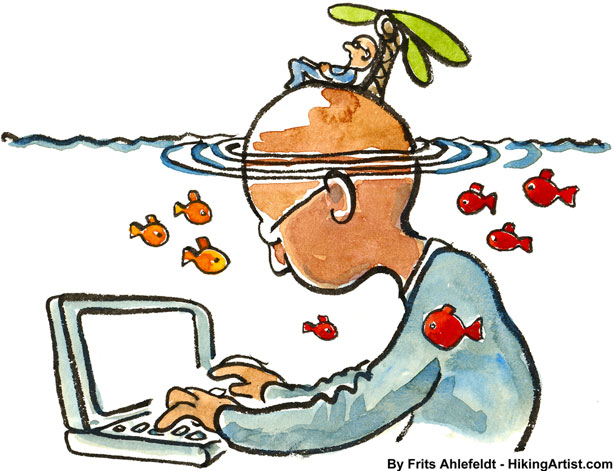 Some people and personality types are more creative than others, there is no question about that fact. However, everyone is creative no matter how it's defined. Many just don't think of their skills as creative.
Their reasons are numerous. One I'd like to remove from the list comes from too tightly defining what creativity is.
Some people and personality types are more creative than others, there is no question about that fact. However, everyone is creative no matter how it's defined. Many just don't think of their skills as creative.
Their reasons are numerous. One I'd like to remove from the list comes from too tightly defining what creativity is.
Creativity is finding a new way to fund R&D. Creativity is setting up a network to better utilize your hardware or help your staff. Creativity is hiring the people who will lead your company 10 years from now. Creativity is looking at a problem from a different perspective. Creativity is finding a way to do something - when a common path is blocked.
You'll notice that I didn't mention anything about marketing, design or the arts. Certainly that is how many define creativity, and those are valuable pursuits, but they don't hold exclusive rights to creativity.
To unleash creativity and action in your organization, make a point to publicly redefine creativity. Then, encourage new thinking about old processes. You'll be delighted by the results.
Consistency may make you remarkable!
If you are relentlessly consistent people will notice and reward you. Shoot, you'll be a hero! Think of all the times and situations when you value consistency.
- Policy application at a company with whom you do business
- The umpire's strike zone
- Driving your car - or how others drive theirs
- Policy application at your company
I know there are many more or subsets of those above, but you understand the point.
We tend to notice when someone is inconsistent because it upsets the balance. We calibrate our expectations based on experience. When that experience changes, we get confused. If it changes in a negative way, we get frustrated. The converse it also true.
Notice I said 'someone' is inconsistent. I didn't say a company is inconsistent because it is individuals that make consistency decisions. A company that recognizes inconsistency in their staff will train accordingly and reap the benefits.
This week look for ways you or your company can become more consistent. Then, take steps to make it happen. Both your bottom line and your customers will love you for it.
Clear communication is the next killer app
Mark my digital words. Clear, well-considered communication will be a trait that makes someone a lot of money in the next 20 years. Most certainly that communication will be about a product or service that is remarkable, but chances are someone will use their great communication skills to develop something worth talking about, or at least to build the team to create the product.
We are connected and communicating more than ever before - and often saying less. Certainly the speed in which communication is allowed contributes to our inefficiency. Inefficiency in this case = noise. When there is noise we invent things like mute buttons, caller ID, and spam filters.
I love having choices about how we may communicate with one another, but eventually everyone gets weary of noisy chatter and wants something of substance: a challenge, a conversation, a book or a great product that solves one of life's hurdles.
Foster clear, concise communication for yourself and those around you. It will set you apart and it might even make you or your company remarkable. Now that's something worth talking about.
Truth, Lies and Stories
I don't know about you, but I really don't like it when someone tells me something that is factually true, but is untrue when the full context of the situation is known. This is not a political article, although political ads provide plenty of examples of trying to persuade by withholding the complete truth. From my point of view this is worse than a straight out lie - because the communicator is attempting to manipulate you by telling part of the story.
Politics certainly does not have a corner in the lying market. Plenty of companies stretch the truth a little or a lot.
Nothing will damage your reputation or brand more quickly than lying. People will find out and when they do they will not be happy. Chances are they will tell A LOT of people about the falsehood and your brand.
Be straight forward and honest in all of your dealings and you will be rewarded. Own mistakes, tell the truth, and have a great product or service. Customers will flock to you.
Now, it is important to remember that you don't have to make buying decisions for customers with your honesty. I've seen companies attempt to be so transparent that they nearly talk customers out of buying something even though the customer would benefit from the product.
Present the product fairly. Be straight forward, but the role of marketing is to entice interest and inform. If you have a concern you want to be discussed when a customer calls - make sure it is on the campaign summary you provide to sales people, so they discuss it with customers (or at least make sure the issue is understood) before the sale is finalized.
A veteran sales person shared this with me long ago and I have not forgotten it: always tell the truth, it's easier than trying to remember who you lied to!
Marketing is trivial
I had something else planned for today, but it seems trivial now. I'm not devaluing learning and growing in your profession as a marketer, salesperson or executive. But, I want to be somewhat more personal.
Events recently in Aurora, CO or in Evansdale, IA and Penn State need to make us pause  and consider how we treat one another. Further, if we know someone is struggling - a little or a lot, we need to act. First to help them and second to protect others. Helping doesn't need to be filled with drama; often small acts may redirect someone's path in a better direction for them and ultimately others.
We live in one big community, and while we have our different customs and priorities, people want largely the same things: Opportunities for success and safety for themselves and their families.
We are all in a position to help someone and sometimes the moment to help comes up quickly. Other times you can see it coming and prepare. Regardless, please take the opportunity to help those you touch using compassion and persistence.
They will benefit. You will benefit and others you don't even know may benefit.
Thanks for all you do. Blessings to all.
Why you should cheer when a customer objects to price
Many of the sales people who I have the pleasure to work with would not include sales in their description of what they do for a living.
Most are in the broader category of customer service, which requires a strong set of diverse skills. They view themselves in a service role more so than a sales role. This is fine because it fits their personality and the needs of their customers well - most of the time.
they do for a living.
Most are in the broader category of customer service, which requires a strong set of diverse skills. They view themselves in a service role more so than a sales role. This is fine because it fits their personality and the needs of their customers well - most of the time.
A problem we often discuss involves a customer objecting to price - and that's not the real problem. The problem comes in the customer service/sales person's reply, which is often 'full retreat' into helping the customer figure out how to save money, when that might not be:
a) What they came in for or
b) What's in their best interest
It certainly isn't what is best for the company.
When a customer objects to price it's the first sign they are ready to BUY the product or service being discussed. That's right, price objection is a buy signal.
Essentially they are telling you, "I want this, but I don't think it has as much value as you think it does. Please explain more about why it has the value you state?"
We might need to recalibrate our hearing on this topic. So we hear what the customer is saying rather than just default to: "I don't want that - it's too much money."
Now, I do recognize that you may end up with a customer not buying because they cannot afford the product, but my bet is it will not be the case for the majority of customers.
Listen to them. Ask them which of the benefits or features they don't understand. Chances are they may not understand them all the first time through, so they are discounting one or more of them.
Get practical. Explain the benefits in a context that matters to them.
You still might not make the sale, but you'll educate and inform that customer. They might go 'think about it' and be back next week, ready to buy.
Give it a shot and let me know how it goes.
Process = Success
If you implement anything more than a few steps long you have a process. Done well a process is your friend. It helps marketers or  executives to insure you cover important bases and don't miss things. A good process is not static and improves over time.
An example from my daily work is our review process for newsletters - both electronic and printed. The process has saved us many times from making errors both BIG and small. We use similar processes for campaign themes and various other projects, as well. It works like this.
executives to insure you cover important bases and don't miss things. A good process is not static and improves over time.
An example from my daily work is our review process for newsletters - both electronic and printed. The process has saved us many times from making errors both BIG and small. We use similar processes for campaign themes and various other projects, as well. It works like this.
- We prepare and send a "First Look" which is mock up of the piece. It might have full stories and graphics in some places and ideas for stories in other places. It prompts the discussion.
- We prepare the newsletter based on feedback and send what is a 98% complete document to make sure the content we've developed follows the feedback/discussion provided in the First Look session. We state this is not polished, but should be close and we talk about any holes that still need filling (the 2%). We ask for a keen eye review.
- Following comments/suggestions/corrections, internally we do what we call the FTC (fine tooth comb). This is a detailed review where you re-read every word and you need to be in full editor mode. After writing and laying something out - often you can't see the forest for the trees, so you need extra keen eyes at this point.
- After FTC, we send the final out for approval. If someone finds something, we fix it. Most often, it is approved and we order.
This process works because it has been developed over time and everyone knows what to expect. We use it consistently and participants know what is needed at each step. It makes it easier for all involved AND we get the best results because of it.
What processes do you use to make your tasks easier to accomplish? An advice to make our process better? I love to learn.
Purpose and passion are 'self serve'
These days you can outsource many responsibilities in your business. Often, you and your customers are better served by doing so because you  can hire great expertise at less cost than it would take to employ them in-house. You'll likely gain some efficiencies too.
But, there are at least two areas you can't hire out:
can hire great expertise at less cost than it would take to employ them in-house. You'll likely gain some efficiencies too.
But, there are at least two areas you can't hire out:
1. Your company or organization's purpose
AND
2. The passion it takes to sustain the organization or company
One can't be sure of the reason some companies try to outsource these core elements. My guess is they are tired or they are lazy.
I've seen this done under the veil of 'planning' where an organization wanted the facilitator to lead them to their passion or purpose. In reality, they were not willing to do the soul-searching work it took to get to the answers they needed. Granted, sometimes you may need the assistance of someone to help you with unpacking the 'how' of your purpose, but never the 'what'.
I urge you to do the work. If you don't know how, try this. Shut off all electronic devices and go to a place you cannot be disturbed for a few hours. Without distraction, it may not even take this long. Be sure to take a pen and a legal pad with you.
- Then, ask yourself this question: Why do people come to your business or organization?
- If you are failing and need to make a change, the question might be: Why do you want them to come to your organization or business?
- Then, ask yourself this: What really makes me excited about our business?
Discovering these answers will invigorate and excite you. If it doesn't, you have not found your purpose or passion.
How to make people care.
Many have written about this topic and the issue is not solved evidenced by an example I witnessed while traveling recently. Here's the short version: Flight was oversold in an airport full of people who had been delayed by weather, so there is a standby list. Gate agent continually begs people to give up their seat, so they can get down to the number. I'm not sure if anyone bit or not. Regardless, boarding goes on as normal.
An adult son of one of the standby passengers is on the plane. He calls Mom and says they are about to close the door and there are 5 seats available. Mom goes to gate agent saying, "Hey, please get me on that plane. My son on the plane says there are 5 open seats." Agent was about to close the door says, let me check. Turns out there were 6 seats available, so most of the stand by passengers got to go - thanks to the son.
I understand that in this situation there are MANY moving parts. Stress is huge for all involved. The airline wants to be 'on time.' However, I was struck by how little the airline staff seemed to care. They had 6 open seats on a plane leaving an airport PACKED with people and they didn't appear to be acting to fill them. Wow!
Again, I realize it is crazy for airline staff in situations like this, but what a perfect time to really care about the people standing there waiting to go - wherever they planned to go.
This situation caused a discussion among our traveling party about how to make people care. Of course, there are no quick fixes and even caring people can have a bad hour or two.
So what can you do to instill caring as part of your company culture? Here are some things to consider.
1. If you have the chance, hire to this skill. Make it one of the skills you MUST have. Department doesn't matter.
2. Make sure you model caring to your staff. Help people. Show compassion. Let them know this is who you are as a company.
3. Make your expectations clear and give them permission to fix a problem. You might need limits, but keep them general.
4. Reward employees who consider customer experience - before or during a problem.
Regardless of your industry, caring employees matter. Your company will thrive because of them while others wilt.
What are your favorite ways to make employees care?
Clarity in the sales process IS the sale!
Clarity IS the sale, and clarity may take many forms. Too many sales people, or maybe more importantly, management, do not appreciate this.
Make it easy to understand = customer buys.
this.
Make it easy to understand = customer buys.
Make it confusing = customer ignores you or moves on to buy from someone else.
Selling really is this simple. But, we make it more complicated all the time. I understand that some products or services are complex. Honestly, that doesn't really matter.
If the seller is transparent (demonstrates trustworthiness) the buyer will pick up the cue. It is easy to be clear when you are trustworthy.
Is it somewhat scary for the seller to be vulnerable? Absolutely!
Is it necessary in order to be overwhelmingly successful in any type of sales. Yep.
Often, the scary part for sales people is they don't want to be transparent enough to allow clarity to happen, so they skirt issues, they mitigate their speech, or use industry jargon for cover. The adage goes - if you can't convince them, confuse them.
Customers, not wanting to be 'taken,' are on guard all the time. They'd love to be open, but experience has taught them not to say too much for fear of losing leverage.
If you've ever had the pleasure of a transparent sales person, you know the comfort that feeling provides. Start building an organization of transparent sales people today. Your customers and your bottom line will thank you for it.
What baseball can teach you about being a better marketer!
I’ve heard many people say “baseball is so slow” or “baseball is boring.” If I know them, I'll ask why they  feel that way. Usually the answer is similar to “there is so much standing around.”
I’ll admit I was practically born on a baseball field and I love the game. Certainly not everyone has that same experience. However, there is a lot the game can teach marketers if we see what is really happening with every pitch.
feel that way. Usually the answer is similar to “there is so much standing around.”
I’ll admit I was practically born on a baseball field and I love the game. Certainly not everyone has that same experience. However, there is a lot the game can teach marketers if we see what is really happening with every pitch.
Baseball is a game of fundamentals and planning. So is marketing.
Baseball is a game of strategy and patience. So is marketing.
Baseball is a game of subtlety and adjustments. So is marketing.
A fundamental example: if a base stealer’s footwork is bad, he will need to be one step faster than someone with perfect fundamentals to steal a base. If a marketer doesn’t engage staff early by asking questions and using their feedback, your campaign/promotion won’t be as successful as if you had.
A strategy example: there are (at least) 5 more ways to score if a runner is on second or third base, so you will see team sacrifice an out to move a runner up. It is basic baseball strategy, based on numbers. As a marketer you need a strategy and then you need to follow it. Too often I see a lot of wishing and hoping. Have a well-considered strategy. Use it patiently. Judge it carefully.
A subtle example: professional baseball players are great defenders too. They make hard plays look easy. Why? Because they were positioned correctly or they anticipated where the ball would be hit based on the pitch thrown or the hitter’s tendencies. They or their coaches notice small things and adjust accordingly. Baseball is a game of constant change. Marketing is exactly the same. Your ability to adjust in the short and long term is what will make your success.
See, baseball is not slow or boring when you know what to watch. Enjoy!
You get more bees with questions!
Sales. Team building. Marketing. Or, just getting along with others. This skill will assist you in  many areas.
Today there are numerous ways to interact with people. Facebook. Phone calls. Email. Skype. And yes, even face-to-face. This method will work with all of them.
many areas.
Today there are numerous ways to interact with people. Facebook. Phone calls. Email. Skype. And yes, even face-to-face. This method will work with all of them.
It has nearly miraculous warming effects on people. The better you get at this the more positively people will think of you or your company. They’ll remember you. You likely will make more sales and build more brand equity. You'll probably be happier too.
What is this wonder skill? Questions.
Ask questions in a kind and polite manner and doors will swing wide open for you.
It takes sincerity. Failure may be painful because false sincerity is worse than rudeness. Consistency is needed to prove your sincerity at times.
If you show an interest in the people, remember names and use them to address those in which you speak, you’ll stand out and be remembered. Remember the sincerity rule here because you don’t want to be ‘that guy’ that over does this.
People care about their own interests and wants. That is not a fault; it’s just a fact. They might need what you have, but given the choice they’d rather get it from someone who is interested in them.
Done right. You’ll get more bees with questions. I promise.
Make it hard to do business with you. Your competitors will love you!
Recently I had an interaction with a company I do business with. I like them. I recommend them because overall they have a good product and staff that understands all aspects of the industry.
The interaction was fine, but it was not great. And that is "The rest of the story."
that understands all aspects of the industry.
The interaction was fine, but it was not great. And that is "The rest of the story."
Some departments at this company insist on making it difficult to do business with them. How they make it difficult does not matter. Difficult is relative, but you'll know it when you see it. My guess is that the CEO and the department leader have no idea this is happening.
Are you making it easy or hard to do business with your company?
You might be able to separate yourself well enough to answer this objectively. If you can, great. Do it.
If you can't, ask some staff members that have the ability to reflect and analyze things like this. Or, ask a few good customers.
Start with a question like:
What really bugs you about doing business with us?
or
What one or two things would you ask me to fix if you took over our business tomorrow?
All this assumes you are willing to change or at least adjust the problem area. If you're not, you might want to wait until you are ready.
Pricing, packages, bundles. Are they right for you? Yes? Start here.
I do a lot of work with telecommunications companies and it occurred to me that a webcast on 'bundling' I did for them last year might have some  value to others. The concepts can certainly extend to many other industries, in fact, they are quite interesting when viewed through this lens.
So if you are interested in pricing and bundling your products or services, you might want to scan this. I'll include a link to the slide deck at the end of this post.
value to others. The concepts can certainly extend to many other industries, in fact, they are quite interesting when viewed through this lens.
So if you are interested in pricing and bundling your products or services, you might want to scan this. I'll include a link to the slide deck at the end of this post.
So, what are the initial questions you want to ask yourself before you dive into bundling or a pricing restructure? Here are a couple to get you started:
- Do you have the margin for it? Sometimes bundles just don't make sense. If they are not for you, don't push it.
- Do you have capacity? This can be defined however you want: time, inventory, capital, etc.
- What are your competitive pressures? Simple question. How does competition affect your pricing?
- What are the goals for your bundling? Simple questions #2. What are your reasons for wanting/needing to bundle?
Reasons to bundle vary. Below are some to consider that MAY apply to you or could if you worked at it.
- Stickiness: in most industries customers in bundles with more products reduces churn significantly!
- Customer expectation: bundles are easy (think Extra Value Meals and 2for1 deals). Customers like them.
- Easier to sell/explain/understand: putting stuff together that makes sense is easy to buy and sell.
- Increase revenue: Often bundles are used to raise Average Revenue per User/Customer.
Be relevant if you decide this approach is right for you.
- Talk about what is important to customer, not what is important to you.
- Create products that show you are concerned about customers needs.
- Educate them concerning products and services they want or need.
Finally, be creative with your creative!
- Be thoughtful about your customer. Use words & graphics that connect to them & pull them in.
- Be consistent with your look & message. About when you are getting bored, they are starting to hear.
- Know the hot buttons and push them. What matters to customers? It shows you care and are listening to them.
Click here to read or download slide deck.
Good luck. Please let me know what questions you asked yourself as you considered this for your industry or business.
Do you feel safe to make the wrong decision?
Trust is the cornerstone of a good company, and a good family for that matter. Many fathers celebrated yesterday and I’d be willing to say that many cards had words similar to “thanks for helping, protecting and loving us.” I’m glad so many fathers are deserving of such praise.
Though companies are NOT families, they need many of the same things from their leader (whether female or male): assistance, safety and love, which are the foundation for trust.
If you are a manager at any level, you are entrusted with the care of those you manage. They need to trust you. You need to trust them. This is never a one-way street and it always starts with the leader. Always.
This can be somewhat scary if you are a new leader or just starting to build your culture. You’ll feel exposed. If you do, then you’re doing this right.
When your staff feels safe to make a tough decision because they know there's a trust safety net should things go wrong, productivity will soar – theirs and yours.
Need more upside? Decisions will get better because trust leads to more open feedback on the front end, which leads to better results. Obviously, part of trust is holding people accountable to their expectations. Expectations provide the guidance everyone needs to be successful.
The best news of all is trust works for everyone from marketers to technicians regardless of industry.
I've heard many great stories about how trust has been demonstrated. What are some of yours?
Joyous impatience
My Mom gave me a cup for high school graduation that said "God grant me patience...and HURRY!" I didn't yet recognize just how impatient I was. But she knew and I soon learned.

As a marketer or product developer, always remember: impatience can KILL your chance for success in so many ways.
For starters, you need patience to create ownership in ideas or strategy. Then, you need patience to allow the plan to work. And you need still more patience dealing with staff when they say things like "do something different because this idea hasn't worked" when results are not immediate.
Over the years, I've learned how to manage my impatience (mostly). I even have found ways to use it to help me create urgency when needed - without going overboard. A sense of urgency is good, and in many companies dearly needed, but impatience is not.
Try these three things if you're impatient:
- Go slow when you want to go fast. This works for talking and actions. Try it. Obviously this is scaleable based on the situation or magnitude of the matter at hand.
- Find a healthy distraction to save you from yourself. Maybe it is a walk around the office, chewing a piece of gum or 10 push ups. Back when I could count my clients on 1 hand and worked in a home office, I would mow my lawn or take a quick bike ride rather than pester my clients. Almost always, after that 30 minute break - I'd have the email reply I needed to move the project along.
- Work on something you are curious about. If you need some help, check out Ted Talks.
Seth Godin talks about impatience in his Seven Marketing Sins post and in his interview below. Enjoy. [youtube http://www.youtube.com/watch?v=sknuiFywKLM?feature=player_embedded]